
Remembering the Mighty Fitz
Fifty years after the sinking of the S.S. Edmund Fitzgerald, a meal from her galley reminds us how food carries memory across time and water.

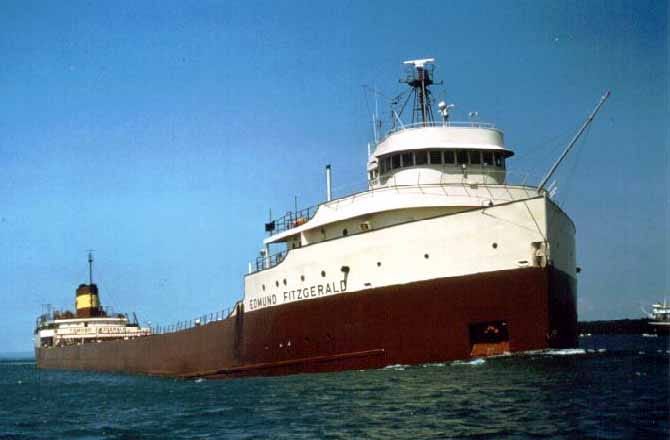
Fifty years ago this week, the iron ore carrier S.S. Edmund Fitzgerald slipped beneath the waves of Lake Superior along the U.S.–Canada border, taking all 29 souls aboard with her. The events of November 10, 1975, were immortalized in Gordon Lightfoot’s haunting 1976 ballad, “The Wreck of the Edmund Fitzgerald.”
The Fitz hauled pelletized iron ore from the mines of Minnesota to the steel mills and factories of Michigan and Ohio — including my hometown of Toledo, the same city that Captain Ernest McSorley once called home.
Work on a lake freighter is long, hot, and monotonous. Sailors are away from home and family for weeks or months at a time. According to Chef Catherine Schmuck, who’s spent more than two decades cooking on Great Lakes ships,
“For me personally, and not all of the cooks look at it like this, but I look at it as my responsibility not just to serve food to the crew, but to create an atmosphere that’s like your kitchen at home. It’s monotonous for the boys on the ship because they’re working every day with no days off, and the only difference in their day is what’s on the menu. It’s my place to kind of create somewhere that’s the highlight of their day.”
Once again, I’m reminded that food is more than sustenance — or perhaps it’s sustenance of another sort. It’s comfort. It’s familiarity. It’s a reminder of life beyond the waves.
As a son of the Great Lakes, the loss of the “Mighty Fitz” is etched on my soul. By the time I was six, I had checked the record of Lightfoot’s song out from our local library so many times that the manager eventually let me keep it. It was my favorite song for years. I was fascinated by the work of lake sailors, and for a while, I thought I might grow up to be one.
Though it wasn’t to be, my respect for those who sail the inland seas has only deepened. I mark the anniversary of her loss every year remembering those who lived and worked aboard the freighters that keep our country’s heartland alive.
This year I found a recipe for Chicken Paprikash, a crew favorite during the 1973–74 season — the Fitzgerald’s last full year on the lakes. The original was a simple, hearty braise, meant to feed a hungry crew at the end of a long watch. I made a few small adjustments for flavor and balance — sautéing the onions and bell peppers until soft and golden, browning the chicken to build a richer base, and adding a touch of garlic for depth. I also used boneless, skinless thighs instead of bone-in pieces, which cut the total cook time down to about thirty-five minutes without sacrificing tenderness or flavor.
I only came across this recipe this year, but when I cooked it, it felt like opening a small window into the lives of the men aboard the Fitz. The same waters that carried Captain McSorley and his crew also shaped the towns and families along their shores. For those of us from the Great Lakes, their loss isn’t just a line in a song; it’s a story woven into who we are.
As the chicken braised and the kitchen filled with the smell of paprika, onions, and peppers, I found myself thinking of the sailors who lived their lives between iron and water — and the cooks who gave them a taste of home out on the lake. In a way, this dish is more than comfort food. It’s a quiet act of remembrance, a way of keeping their story warm through the long November night.