
Hot Chow, Cold Desert
Long before I was a chef, I learned that warmth—not perfection—is what keeps people going.

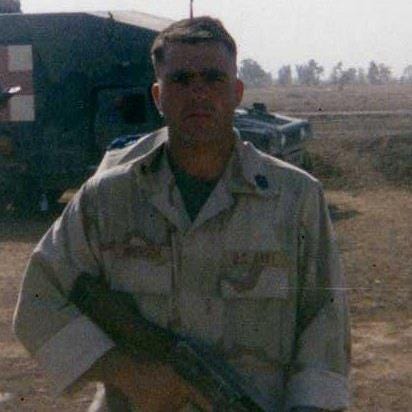
I pulled the hood of my sleeping bag over my head, blocking out the face-numbing cold. Rolling to my side, I closed my eyes and welcomed the incoming night. It was February 2003 and just after 1800, that’s 6PM for the civilians out there, and darkness was falling fast over the Kuwaiti desert.
I was drifting in that thin space between awareness and sleep when the tent flap rustled open and someone yelled, “Hey, BAS! Hot chow is here!”
Around me, men, mostly boys, really groaned in unison. A few cursed softly. A couple pulled on boots and jackets. The rest pretended they didn’t hear. I’d already eaten an MRE and seriously considered staying curled up in my bag. Tomorrow was another day, and maybe by then someone somewhere would have better luck with logistics.
But I’d been praying for hot chow since we arrived almost three weeks earlier. Something about that quiet plea echoed back at me in the cold.
So I unzipped my bag, shivered my way into my uniform, and grabbed my gas mask and weapon. Outside, the air bit straight through the thin fabric of my sleeves. Marines and sailors were forming up in reverse rank order: privates eat first, the commander eats last. Junior marines and sailors made the line ripple like an accordion as they shuffled into place.
When I reached the head of the line, a small group of officers and senior NCOs stood behind the containers, serving the food themselves. They didn’t say much, just nodded us forward one by one. I took a cardboard tray and watched, or tried to watch, as each man dropped a scoop of something onto it. The darkness swallowed all color and definition. I couldn’t see a damn thing — but I could feel the heat seeping through the cardboard, warming my numb fingers as I carried it back to the tent.
Inside, the dim lantern glow bounced off plywood scraps and old MRE boxes that someone had convinced into a table. I finally saw what I had been given: chicken and rice. Leg quarters mostly. Overcooked, over-held, the meat falling from bone because it had been sitting too long in hot boxes.
I took one bite, then remembered to pray.
“Aren’t you supposed to pray before you eat?” one of the guys asked.
“I was just making sure it was worth praying for,” I said without thinking.
The tent erupted — real laughter, the kind that cuts through fatigue and sand and boredom. Someone shouted, “No it isn’t!” and that only made it funnier.
But the truth was… it was worth thanking God for.
Because I had asked for it.
Because it was hot.
Because it was real.
Because someone had to stand in their own freezing darkness to make sure we had it.
And as I sat there, hunched against the cold, letting that heat seep into my hands, something settled into me — something I wouldn’t fully understand until years later in kitchens, over stoves, over smokers, serving people who needed warmth of their own.
Food doesn’t have to be beautiful to matter.
It doesn’t have to be perfect to save morale.
It doesn’t need technique to reach a person who’s been subsisting on dust and boredom.
Sometimes all it needs is heat.
And sometimes all we need is the reminder that we’re not forgotten.
Twenty-plus years later, it’s not the flavor I remember. It’s the feeling — that fleeting moment when something warm cut through the cold, and for the first time in weeks, I tasted comfort instead of survival.
And that’s never left me.
This is lovely Charles. Congratulations on your new career and do keep writing.